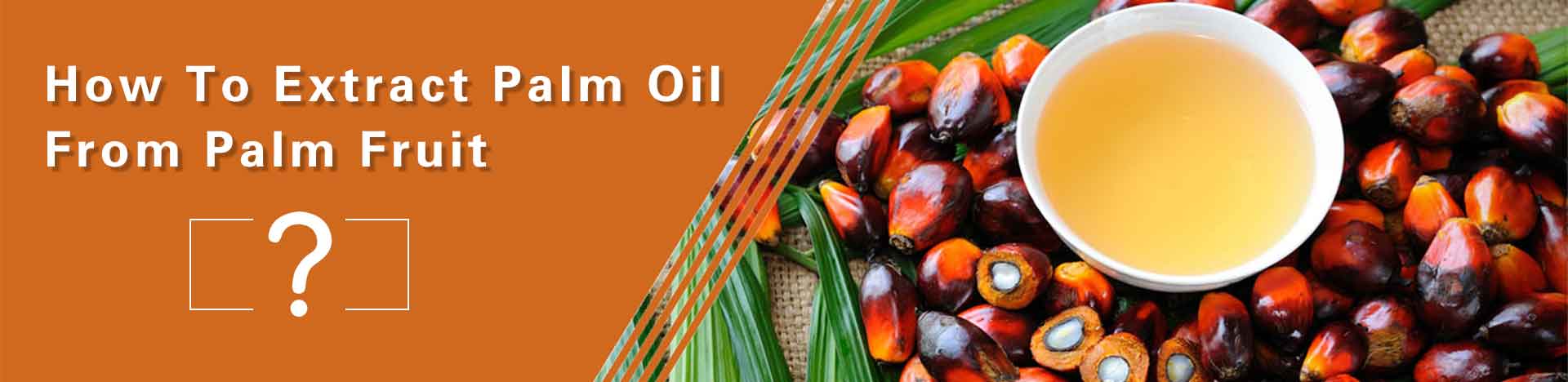

Why Does Palm Fruit Threshing Leave Unstripped Fruits? Causes and How to Reduce Them
After palm fruit threshing, some fruits may remain attached to the bunches instead of being released as expected. This does not always mean that the palm fruit threshing machine itself has failed. The problem can be related to upstream sterilization, the time between sterilization and threshing, machine operating conditions, feeding load, raw material condition, or worn or incorrectly adjusted components.
The key is to identify what is affecting fruit detachment before making major changes to the machine. Different causes can produce similar symptoms, so the most effective approach is to look at the complete operating situation rather than focusing only on the thresher.
1. What Causes Palm Fruit Threshing to Leave Unstripped Fruits?
| Cause | What May Happen |
| Inadequate sterilization before threshing | Fruits remain firmly attached to the bunches because they have not been sufficiently loosened before entering the threshing stage. |
| Long delay between sterilization and threshing | Fruit detachment may become more difficult if the sterilized bunches are left for too long before threshing. |
| Excessive or uneven feeding | More unstripped fruits may appear when too much material enters the drum at once or the feeding flow becomes unstable. |
| Unsuitable machine operating conditions | The threshing action may be too weak or inconsistent for the incoming bunches. |
| Worn or incorrectly adjusted components | Mechanical action becomes weaker, reducing the ability of the machine to detach fruits effectively. |
| Differences in bunch condition | The amount of unstripped fruit may vary between batches because maturity and physical condition affect fruit detachment. |
For performance evaluation, it is better to record an actual measured result rather than simply describing the threshing performance as “good” or “poor.” A simple project-specific indicator is:
Unstripped fruit rate = Weight of unstripped fruit ÷ Total fruit/bunch material evaluated × 100%
For reference, Glory Oiltech (Henan Glory)’s simple-type palm fruit thresher has a fruit stripping rate of up to 98%, while its drum-type model can achieve over 99%. These figures are specific to the corresponding equipment models and should be used as reference values rather than treated as a universal industry standard.
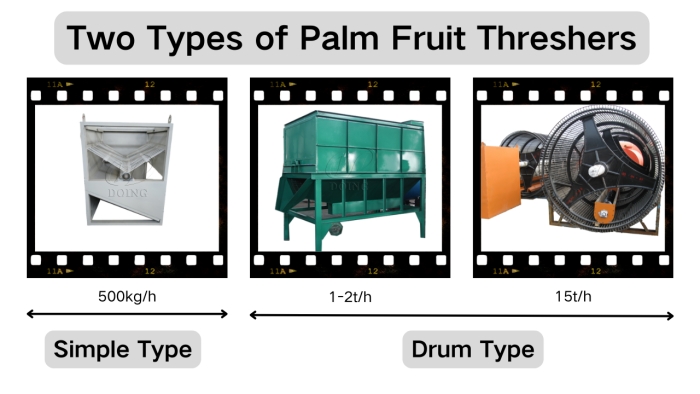 Glory Oiltech (Henan Glory)'s simple-type and drum-type palm fruit threshers
2. How to Reduce Unstripped Fruits During Palm Fruit Threshing
Once the possible causes are clear, the solution is usually to correct the factor that is limiting fruit detachment rather than simply making the machine work harder.
2.1 Ensure Proper Palm Fruit Sterilization
Proper sterilization is an important part of preparing palm fruit bunches for effective threshing. If the bunches have not been adequately sterilized, the fruits may remain tightly attached even when the palm fruit threshing machine is operating normally.
So, if you see more unstripped fruits, don’t increase the drum speed immediately. First check whether the bunches were properly sterilized and whether the sterilization conditions are suitable for the actual fruit and equipment.
Glory Oiltech (Henan Glory) uses steam sterilization at 145°C for 60–120 minutes as a reference process, depending on fruit maturity and equipment design. Different sterilizer types can use different cycle times, so these figures are for reference rather than a universal setting for every palm oil mill.
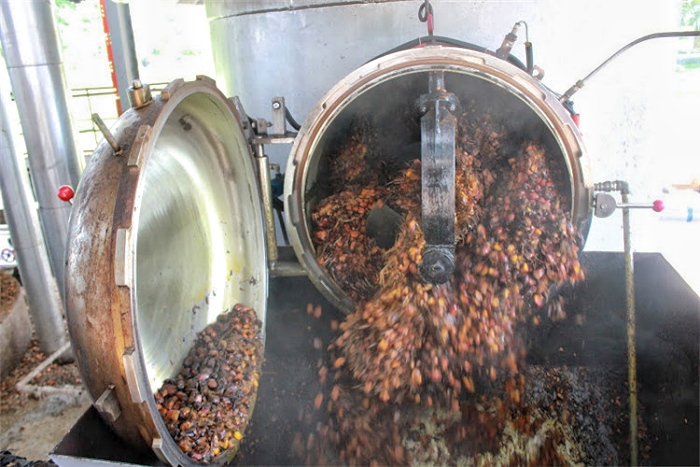 Palm fruit bunch sterilization treatment site
2.2 Minimize the Time Between Palm Fruit Sterilization and Threshing
Even when sterilization is adequate, a long delay before threshing can affect fruit detachment. If sterilized bunches are left for too long before entering the threshing stage, the fruits may become more difficult to detach again.
Where possible, keep the material flow between sterilization and threshing stable and avoid unnecessary waiting or accumulation of sterilized bunches. This is a relatively simple factor to check before making changes to the machine itself.
The sterilization and threshing stages should therefore be considered together when planning the material flow of a palm oil processing line. Glory Oiltech includes both palm fruit sterilizers and palm fruit threshers in its palm oil processing equipment range, so the sterilization and threshing stages can be considered as part of the same processing system.
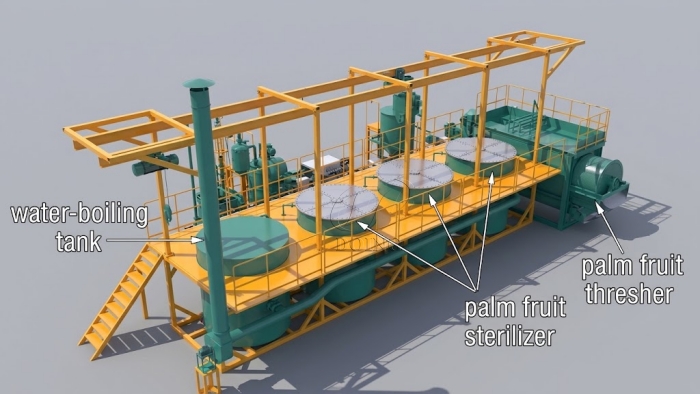 Glory Oiltech's palm oil processing plant
2.3 Match Feeding Conditions and Raw Material to the Palm Fruit Threshing Machine
A palm fruit threshing machine needs a stable and appropriate feed. If too much material enters the drum at once, the threshing action can become less effective. Uneven feeding can cause a similar problem because the load keeps changing during operation.
In practice, start by keeping the feeding rate stable and avoiding overloading the machine. If unstripped fruits increase noticeably when the feed becomes heavier, correct the feeding condition before making major changes to other machine settings.
The condition of the incoming bunches matters as well. Differences in bunch size, maturity or physical condition can affect how readily fruits are detached. If the problem occurs mainly with particular batches, don’t compensate for the raw-material difference simply by making the machine work harder.
The right feeding arrangement depends on the processing capacity, incoming FFB condition and overall line configuration. It is therefore better to select the equipment based on the complete material flow rather than looking only at the nominal capacity of the thresher.
For example, Glory Oiltech’s simple-type palm fruit thresher is designed for 1–2 tons of palm fruit bunches per hour, while its drum-type models cover 1–15 tons per hour. The appropriate model and operating conditions therefore need to match the actual processing scale and raw material.
2.4 Check and Maintain the Palm Fruit Threshing Components
If sterilization, timing and feeding conditions are normal but unstripped fruits continue to appear, it is time to look more closely at the machine itself.
Check the components involved in the threshing action for wear, damage, looseness or incorrect adjustment. Where applicable, check the relevant clearances according to the equipment requirements. A worn or incorrectly adjusted component can reduce the mechanical action available to detach the fruits.
If a component is only incorrectly adjusted, adjustment may be enough. If it is already damaged or badly worn, replacement may be necessary. Try not to change several machine conditions at the same time, because then it becomes difficult to tell which change actually improved the threshing result.
Where a machine-specific drum speed or clearance is required, use the operating range specified for that machine rather than applying a general figure from another thresher.
For reference, the simple-type palm fruit thresher from Glory Oiltech operates at 480 r/min. This figure applies to the corresponding machine model and is provided as a reference, not as a universal drum-speed standard for all palm fruit threshers.
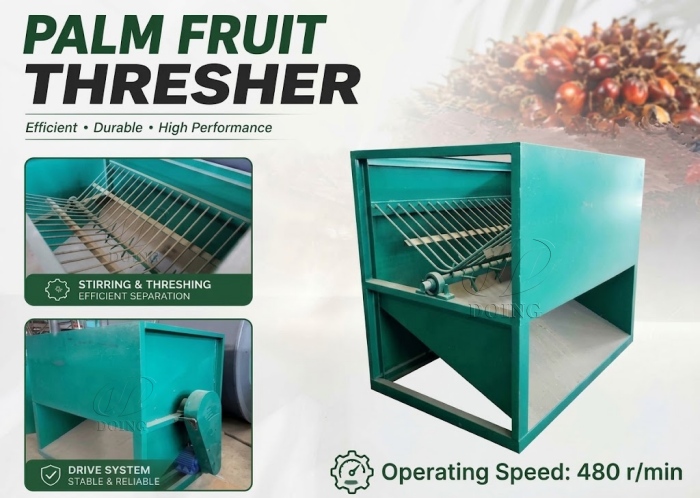 The simple-type palm fruit thresher from Glory Oiltech
2.5 Keep the Palm Fruit Threshing Process Consistent Between Batches
When the raw material changes, the threshing result can change even if the machine settings stay the same. Instead of continuously adjusting the machine for every batch, keep the main operating conditions stable and compare the results between batches.
If a particular type or condition of bunch consistently produces more unstripped fruit, review the upstream handling, sterilization or feeding arrangement for that material. This helps avoid unnecessary machine adjustments and makes the actual cause easier to identify.
If the problem keeps coming back, record the batch, sterilization conditions, approximate time before threshing, feeding condition and measured unstripped-fruit rate. After several batches, the pattern is usually much easier to see.
2.6 What If the Palm Fruit Threshing Problem Still Persists?
If the above factors have been checked and unstripped fruits remain, the problem may require a closer look at the palm fruit threshing machine and the complete processing line.
At this stage, it helps to give the equipment supplier information such as the condition of the bunches, sterilization situation, feeding condition, machine operating conditions and the changes that have already been made. This allows the problem to be assessed from the actual operating situation instead of simply recommending a higher drum speed or replacing parts.
This type of assessment is also reflected in Glory Oiltech’s equipment and project experience. Its palm oil processing range includes both sterilizers and threshers, while its documented project cases include a 2 TPH small-scale palm oil mill in Nigeria, completed on May 23, 2025, and a 5 TPH automatic small palm oil mill in Liberia, completed on April 1, 2024. These projects provide practical references for looking at sterilization, threshing and the wider processing line as a connected system.
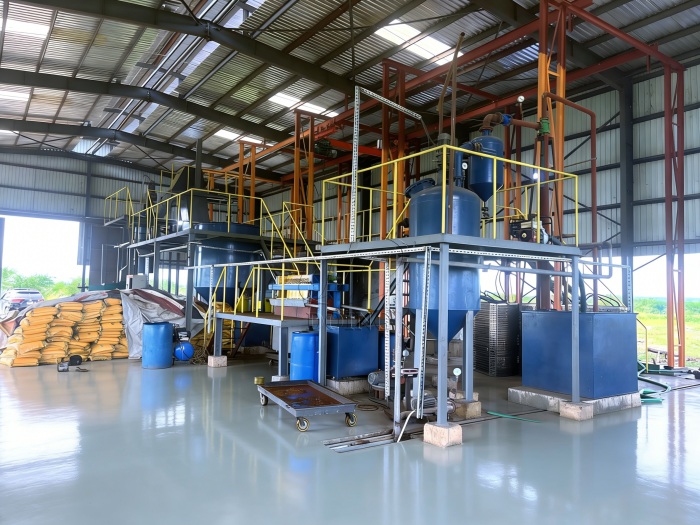 2 T/H Palm oil mill in Nigeria
The goal is not simply to make the machine work harder. You want to find out what is actually preventing the fruits from being detached and correct that specific problem without creating new problems elsewhere in the processing line.
Conclusion
Unstripped fruits after palm fruit threshing do not necessarily indicate a failure of the palm fruit threshing machine. The problem can originate from sterilization, the interval before threshing, feeding conditions, machine operation, component condition or the physical condition of the palm fruit bunches.
A practical solution is to address these factors in sequence and make changes based on the actual operating situation. Recording measurable results, such as the unstripped-fruit rate before and after an adjustment, also makes it easier to determine whether the change has actually improved threshing performance.
If you are planning a new palm oil processing line or need help troubleshooting an existing threshing system, Glory Oiltech can provide equipment selection, technical guidance, commissioning and after-sales support based on your actual processing conditions.
Need help with a palm fruit threshing problem? Contact Glory Oiltech to discuss your raw material, processing line and operating conditions.
Can unstripped fruits be recovered after palm fruit threshing?
Yes, depending on the processing line design, bunches or fruits that remain insufficiently separated can be handled again or sent through an appropriate recovery stage. However, repeated handling should not be used as a substitute for correcting the original cause of poor fruit detachment. If a significant amount of material repeatedly requires reprocessing, the upstream sterilization, feeding and threshing conditions should be reviewed.
How should threshing performance be measured during a production test?
Use the same evaluation method for each test so that results can be compared meaningfully. Record the amount of material evaluated, the amount of unstripped material found and the operating conditions at the time of the test. Avoid comparing results from different batches unless their raw-material and operating conditions are reasonably similar.
What should I avoid when adjusting a palm fruit thresher?
Avoid changing several operating conditions at the same time. For example, changing the feeding rate, drum speed and component adjustment together makes it difficult to determine which change affected the result. Make one controlled change at a time where practical, record the result, and keep the other relevant conditions stable.
What information should I prepare before contacting the equipment supplier?
Prepare: (1)Type and condition of incoming FFB (2)Processing capacity or actual feeding rate (3)Sterilization method and actual conditions (4)Approximate time between sterilization and threshing (5)Current machine model and operating conditions (6)Drum speed, if available (7)Recent changes, repairs, or component replacements (8)Photos/videos of unstripped bunches and threshing result (9)Measured unstripped-fruit rate, if available (10)Adjustments already tried and their results
Providing this information allows the supplier to assess the problem from the actual operating situation rather than making assumptions based only on the symptom.
 PREV:Nothing

-
 How to start a palm oil milling and processing plant?
-
How to start a palm oil processing business in nigeria?
-
How to produce refined vegetable oil from palm kernel oil?
-
What are the steps in palm oil production?
-
Why Does Palm Fruit Threshing Leave Unstripped Fruits? Causes and How to Reduce Them
-
Which Palm Oil Processing Scale Is Right for Your Business? Small-Scale vs. Industrial Mills Compared
-
What Is the Main Role of a Steam Boiler in a Palm Oil Mill?
-
Key Factors to Consider When Setting Up a Palm Oil Processing Plant