

How to Choose a Palm Oil Mill Thresher: Capacity, Types, and Common Problems
A palm oil mill thresher separates sterilized palm fruits from fresh fruit bunches (FFB) before digestion and pressing. Choosing the right machine depends mainly on your processing capacity, plant layout, and production requirements.
For small-scale operations, a simple-type palm fruit thresher with a capacity of 1–2 TPH may be suitable. For larger processing lines, a drum-type palm fruit thresher offers a capacity range of 1–15 TPH. Glory Oiltech (Henan Glory) provides both types for different palm oil processing requirements.
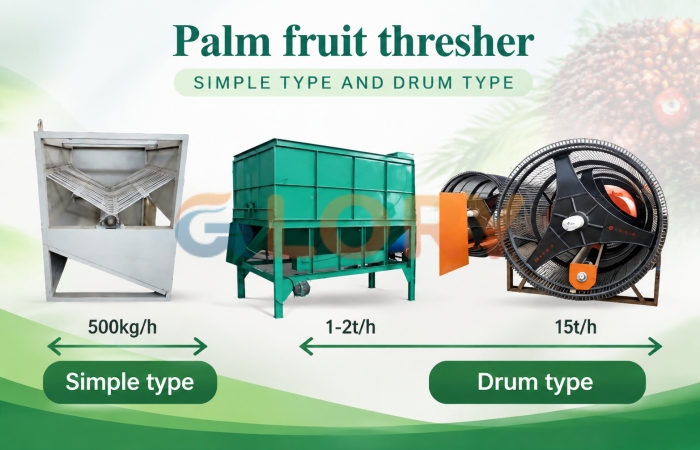 Palm oil mill thresher machine
1. What Does a Palm Oil Mill Thresher Do?
After sterilization, palm fruit bunches enter the threshing section, where the machine separates individual palm fruits from the empty fruit bunches (EFB).
The separated fruits are conveyed to the digestion and pressing sections. Empty fruit bunches are discharged separately and may be collected for use as biomass fuel or for other applications, depending on the plant's arrangements.
When selecting a palm oil mill thresher, Glory Oiltech recommends checking both fruit separation performance and the material flow to downstream equipment. The rated capacity should match the actual FFB feed rate of the processing line.
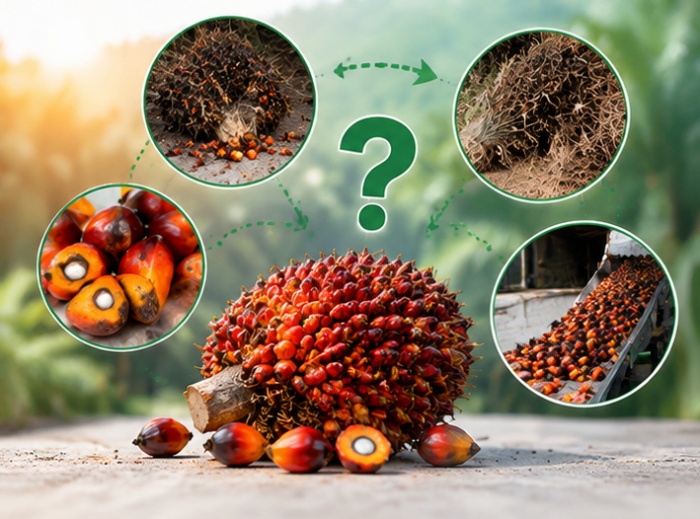 Palm fruit bunches
2. Two Main Types of Palm Fruit Threshers
Glory Oiltech offers two main types: the simple-type palm fruit thresher and the drum-type palm fruit thresher. Their structures and capacity ranges make them suitable for different production requirements.
2.1 Simple-Type Palm Fruit Thresher
The simple-type thresher is designed for smaller palm oil processing operations. Its compact structure makes it an option for small plantations, family workshops, and startup mills with relatively low processing requirements.
Reference specifications
| Parameter | Specification |
|---|---|
| Processing capacity | 1–2 TPH |
| Motor power | 4 kW |
| Rotational speed | 480 r/min |
| Reference weight | 700 kg |
| Dimensions | 2200 × 1200 × 1500 mm |
| Main construction | Carbon steel |
These are reference specifications. Confirm the configuration and rated feed capacity for the selected model before ordering.
Glory Oiltech's simple-type palm fruit thresher is worth considering for mills with relatively low throughput and limited installation space. Before choosing this model, confirm that its rated capacity can keep pace with the sterilization and downstream processing sections.
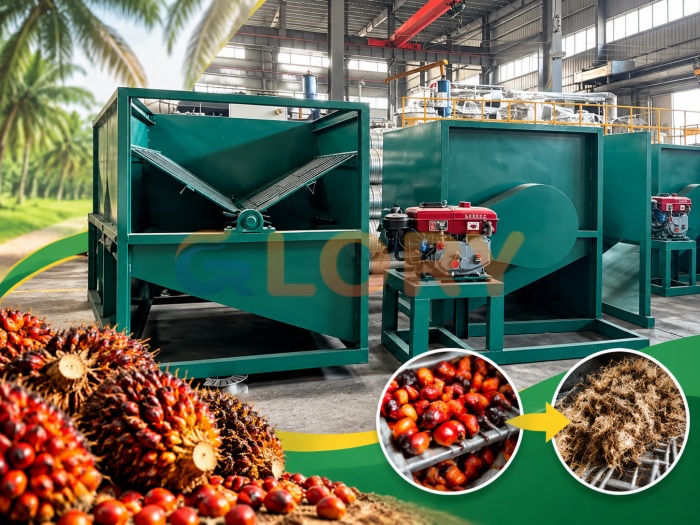 Simple type palm fruit thresher
2.2 Drum-Type Palm Fruit Thresher
The drum-type thresher uses a rotating horizontal drum to separate palm fruits from sterilized fruit bunches. As the bunches move through the drum, detached fruits fall through the grating, while empty fruit bunches are discharged separately.
The drum provides a longer threshing path, allowing the bunches to move through the machine while the fruits detach. Glory Oiltech's drum-type palm fruit thresher range covers 1–15 TPH, giving palm oil mill operators options for different throughput requirements. The final model should be selected according to the actual FFB feed rate, installation layout, and connected equipment.
Reference specifications
| Parameter | Specification |
|---|---|
| Processing capacity | 1–15 TPH |
| Threshing rate | 99% |
| Drum diameter | More than 1.2 m |
| Drum length | 2.5 m or longer |
| Main construction | Carbon steel |
| Feeding material | Sterilized fresh fruit bunches (FFB) |
Specifications should be confirmed against the selected model and project requirements. Actual performance depends on operating conditions and feed material.
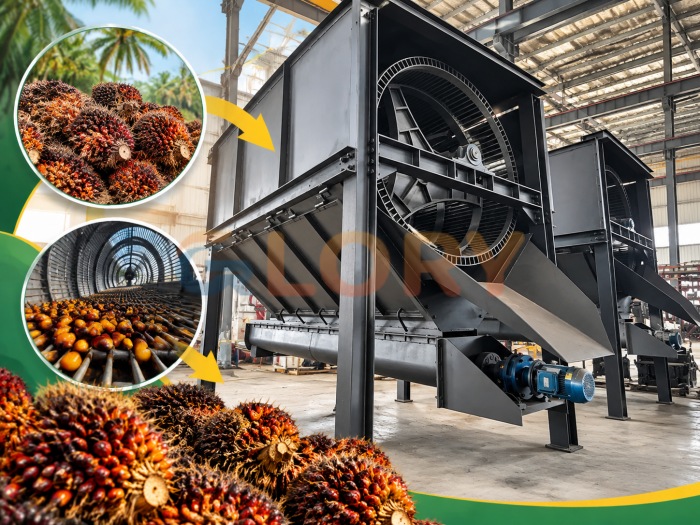 Drum type palm fruit thresher
3. Simple-Type vs. Drum-Type: Which Thresher Should You Choose?
Glory Oiltech recommends choosing between a simple-type and a drum-type palm fruit thresher based on four factors: actual FFB throughput, available installation space, material flow, and the capacity of the complete processing line. The highest-capacity model is not necessarily the best fit.
| Comparison item | Simple-type thresher | Drum-type thresher |
|---|---|---|
| Capacity range | 1–2 TPH | 1–15 TPH |
| Structure | Compact, simple design | Horizontal rotating drum |
| Typical application | Small mills and startup operations | Small to larger processing lines, depending on model |
| Main selection consideration | Low throughput and space requirements | Required capacity and continuous material flow |
| Key point to confirm | Rated feed capacity and configuration | Drum dimensions, rated feed capacity, and layout |
How to Match Thresher Capacity to Your Mill
When choosing a thresher, start with the actual FFB feed rate of your processing line rather than the expected palm oil output.
For example, a mill processing 1 ton of FFB per hour should select a thresher whose confirmed rated capacity can handle that feed rate under the intended operating conditions. A larger nominal capacity is not automatically better if the upstream supply, downstream conveying equipment, or plant layout cannot support it.
Before confirming the model, check:
The processing line's hourly FFB feed rate.
Whether the rated capacity refers to incoming fruit bunches.
The capacity of the upstream sterilization and downstream digestion sections.
Available installation space and the method of conveying fruits and empty bunches.
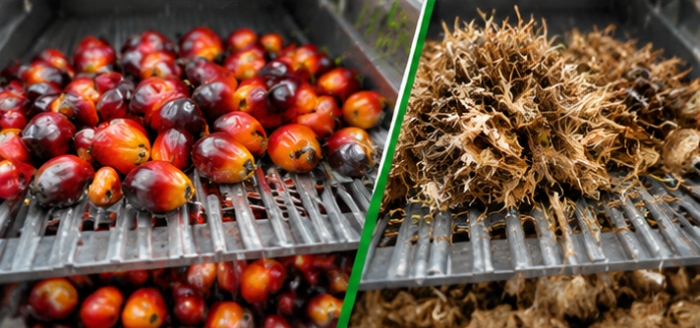 Performance of the palm fruit stripper
4. Common Palm Fruit Threshing Problems and How to Solve Them
When troubleshooting a palm fruit thresher, Glory Oiltech recommends checking sterilization, feeding conditions, and machine capacity before assuming that the equipment is faulty. Identifying the specific symptom first can help avoid unnecessary adjustments or equipment replacement.
4.1 Fruits Remain Attached to Empty Fruit Bunches
Possible causes: Inadequate sterilization, uneven feeding, overloading, or unsuitable thresher operating conditions.
How to check: Inspect the discharged empty fruit bunches. If many fruits remain attached, review the sterilization records and check whether the problem occurs consistently or only with particular batches. Also check whether the machine is being fed evenly.
How to solve it: Confirm that the sterilizer is operating according to its specified process conditions. Stabilize the feeding rate and check the thresher's operating condition before adjusting machine settings.
AOCS technical guidance identifies sterilization and feeding conditions as important factors in fruit removal and oil losses associated with empty fruit bunches. If substantial numbers of fruits remain attached after these checks, assess whether the bunches require further processing under the plant's established procedure.
4.2 The Thresher Cannot Keep Up with the Processing Line
Possible causes: The selected machine capacity does not match the actual fresh fruit bunch (FFB) feed rate, or the feeding and discharge arrangements restrict throughput.
How to check: Compare the actual incoming FFB rate with the thresher's rated capacity. Check for material accumulation at the inlet, irregular feeding, or delays in removing empty fruit bunches and conveying separated fruits.
How to solve it: Stabilize material feeding and check the capacity of the connected conveying equipment. If the thresher is consistently undersized for the required feed rate, review the model selection and overall line configuration.
A higher-capacity thresher is not automatically the right solution if the bottleneck is located elsewhere in the processing line.
 Common palm fruit threshing problems
4.3 Abnormal Noise, Vibration, or Mechanical Problems
Possible causes: Worn, damaged, loose, or incorrectly adjusted components, or operation outside the selected machine's specified conditions.
How to check: Follow the manufacturer's inspection procedure to check the relevant rotating and threshing components, drive system, fasteners, and specified clearances. If the machine develops abnormal noise, vibration, or other signs of mechanical trouble, stop and inspect it according to the operating manual.
How to solve it: Correct loose or incorrectly adjusted components and replace damaged or excessively worn parts when necessary. Use the operating parameters specified for the particular model rather than applying a drum speed or clearance from another machine.
Do not change several operating conditions simultaneously during troubleshooting. Where practical, make one controlled adjustment at a time and record its effect.
Palm Fruit Thresher Troubleshooting Checklist
| Observed problem | First check | Recommended action |
|---|---|---|
| Many fruits remain on empty bunches | Sterilization, feeding, and discharged bunches | Verify process conditions and feeding before adjusting the machine |
| Actual throughput is too low | FFB feed rate and material flow | Check feeding, discharge, and equipment capacity matching |
| Abnormal noise, vibration, or mechanical performance | Machine components and drive system | Inspect and maintain according to the manufacturer's instructions |
For persistent problems, record the incoming FFB condition, sterilization conditions, actual feed rate, machine model, visible condition of discharged bunches, and any adjustments already attempted. Photos or videos of the machine and discharged bunches can also help the equipment supplier assess the problem.
The goal is to identify the cause before increasing machine speed, replacing equipment, or changing the process unnecessarily.
5. How to Choose the Right Palm Oil Mill Thresher
Before purchasing a palm fruit thresher, evaluate the following points.
| Selection factor | What to confirm |
|---|---|
| Processing capacity | Actual FFB feed rate per hour |
| Machine type | Simple-type or drum-type structure |
| Process arrangement | Compatibility with sterilization, conveying, digestion, and pressing |
| Installation space | Equipment dimensions and space for feeding and discharge |
| Configuration | Motor, drum dimensions, and other model-specific requirements |
| Future expansion | Whether the selected capacity fits the planned production scale |
For palm oil mill projects, Glory Oiltech evaluates the required FFB throughput alongside the existing production-line layout. The machine should be able to handle the required feed rate while maintaining a suitable flow of fruits and empty bunches.
If you are building a new mill, assess the thresher together with the other palm oil processing equipment. If you are upgrading an existing mill, first identify whether the current bottleneck is threshing capacity, feeding, or downstream material handling.
Frequently Asked Questions
Should palm fruit bunches be sterilized before entering a palm oil mill thresher?
Yes. In a conventional wet-process palm oil mill, the thresher normally receives sterilized fresh fruit bunches. Sterilization is an upstream process, and the threshing section separates the fruits from the bunches before digestion and pressing.
Is a simple-type palm fruit thresher suitable for a small palm oil mill?
It can be suitable for small-scale operations with a required capacity of around 1–2 TPH, provided the selected model matches the actual FFB feed rate and the rest of the production line.
What should I do if a palm fruit thresher leaves too many fruits on the empty bunches?
First, inspect the discharged bunches and review the sterilization conditions. Then check whether the machine is being fed evenly and whether its capacity matches the actual FFB feed rate. If the problem persists, inspect the machine according to the manufacturer's instructions before changing operating settings.
Can a drum-type palm fruit thresher be customized?
The appropriate drum dimensions and configuration depend on the required processing capacity and installation conditions. Provide your target FFB throughput and plant layout so the supplier can confirm a suitable model.
Does a higher-capacity thresher always improve production efficiency?
No. A higher-capacity machine may not improve overall output if the sterilization, conveying, digestion, or pressing sections cannot handle the additional material. The thresher should be selected to match the capacity and operating requirements of the complete processing line.
Choose a Palm Fruit Thresher for Your Processing Line
Glory Oiltech supplies simple-type and drum-type palm fruit threshers for different palm oil mill capacities. Share your target FFB throughput, daily operating hours, sterilization arrangement, and existing equipment layout so our team can help identify a suitable model and confirm the relevant specifications.


Leave A Message
If you want to know more information about palm oil extraction machine, please kindly leave your phone number. We will get back to you ASAP once we receive your message.